
When disagreements cannot be resolved privately, individuals and organizations
may turn to the California court system to seek a legal resolution. Civil
cases cover a wide range of disputes, including contract disagreements,
property conflicts, personal injury claims, business disputes, and other
matters involving legal rights and responsibilities.
Although every case has its own circumstances, civil litigation generally
follows an established process. Understanding the stages involved can help
readers become familiar with how disputes enter the court system, how evidence
is presented, and how cases may eventually reach a resolution.
What Is a Civil Case?
A civil case is a legal dispute between individuals, businesses,
organizations, or other parties. Unlike criminal proceedings, which involve
allegations of offenses prosecuted by the government, civil cases generally
concern private legal rights, obligations, and remedies.
The person or organization bringing a lawsuit is generally called the
plaintiff. The party responding to the allegations is known as the defendant.
Depending on the dispute, a plaintiff may seek monetary compensation, a court
order, or another form of legal relief.
Common examples of civil cases in California include:
-
Personal injury claims: Disputes involving injuries
allegedly caused by negligence or wrongful conduct. -
Contract disputes: Disagreements concerning obligations,
payments, or terms established by an agreement. -
Property disputes: Conflicts involving ownership,
boundaries, property damage, or other real estate matters. -
Business disputes: Legal disagreements involving commercial
transactions, partnerships, and business obligations. -
Consumer claims: Disputes involving purchases, services,
warranties, and consumer protection laws.
Step 1: Filing the Initial Complaint
A civil lawsuit generally begins when the plaintiff files a complaint with the
appropriate court. This document identifies the parties, describes the
relevant allegations, explains the legal basis for the claims, and states the
relief being requested.
The appropriate court depends on several factors, including the type of
dispute, the amount involved, and applicable jurisdictional requirements.
California superior courts handle most general civil matters, while certain
disputes may qualify for specialized procedures such as small claims
proceedings.
Filing requirements may include submitting specific court forms, paying
applicable filing fees, and following procedural rules. Some individuals may
qualify for a fee waiver depending on their financial circumstances.
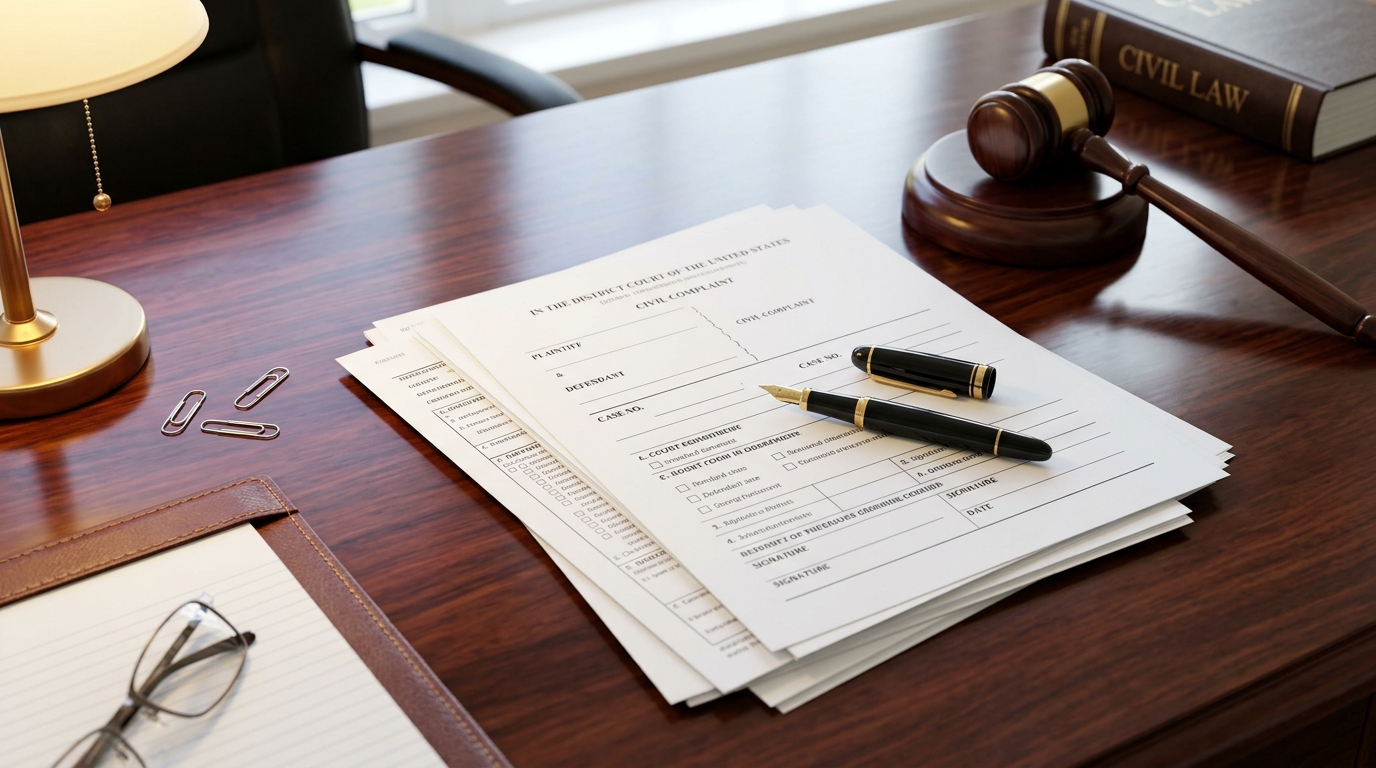
A civil lawsuit generally begins with filing the appropriate complaint and
supporting court documents.
Step 2: Serving the Defendant
After a lawsuit is filed, the defendant must generally receive formal notice
of the legal action. This process is known as service of process.
California law establishes requirements for delivering the summons and
complaint. Depending on the circumstances, service may be completed through
personal delivery, substituted service, or another legally authorized method.
Proper service is important because it provides the defendant with notice of
the lawsuit and an opportunity to respond. Incorrect or incomplete service may
create procedural issues that affect how the case proceeds.
Step 3: The Defendant Responds
After receiving the summons and complaint, the defendant generally has an
opportunity to respond within the time permitted by law. In many ordinary
civil cases, a response is due within 30 days after service, although specific
circumstances and procedures may affect the applicable deadline.
A defendant may file an answer addressing the allegations or raise certain
legal objections through appropriate motions. An answer typically responds to
the claims and may include affirmative defenses.
If a defendant does not respond within the required period, the plaintiff may
seek entry of default. However, a default does not automatically mean that
every requested remedy will be granted. Additional court procedures may be
required.
Step 4: Discovery and Evidence Gathering
Discovery is the stage during which parties obtain information and evidence
relevant to the dispute. It allows each side to investigate the claims,
understand the opposing party’s position, and prepare for possible settlement
discussions or trial.
Common discovery methods include:
-
Interrogatories: Written questions that another party must
answer under applicable procedural rules. -
Requests for production: Formal requests for relevant
documents, records, photographs, electronic information, or other materials. -
Depositions: Out-of-court questioning of witnesses or
parties under oath, with a record of the testimony. -
Requests for admission: Written requests asking another
party to admit or deny specific statements or facts.
In a personal injury lawsuit, discovery may involve medical records, accident
reports, photographs, witness statements, employment records, and expert
evaluations. The information gathered can help establish the facts and clarify
which issues remain disputed.
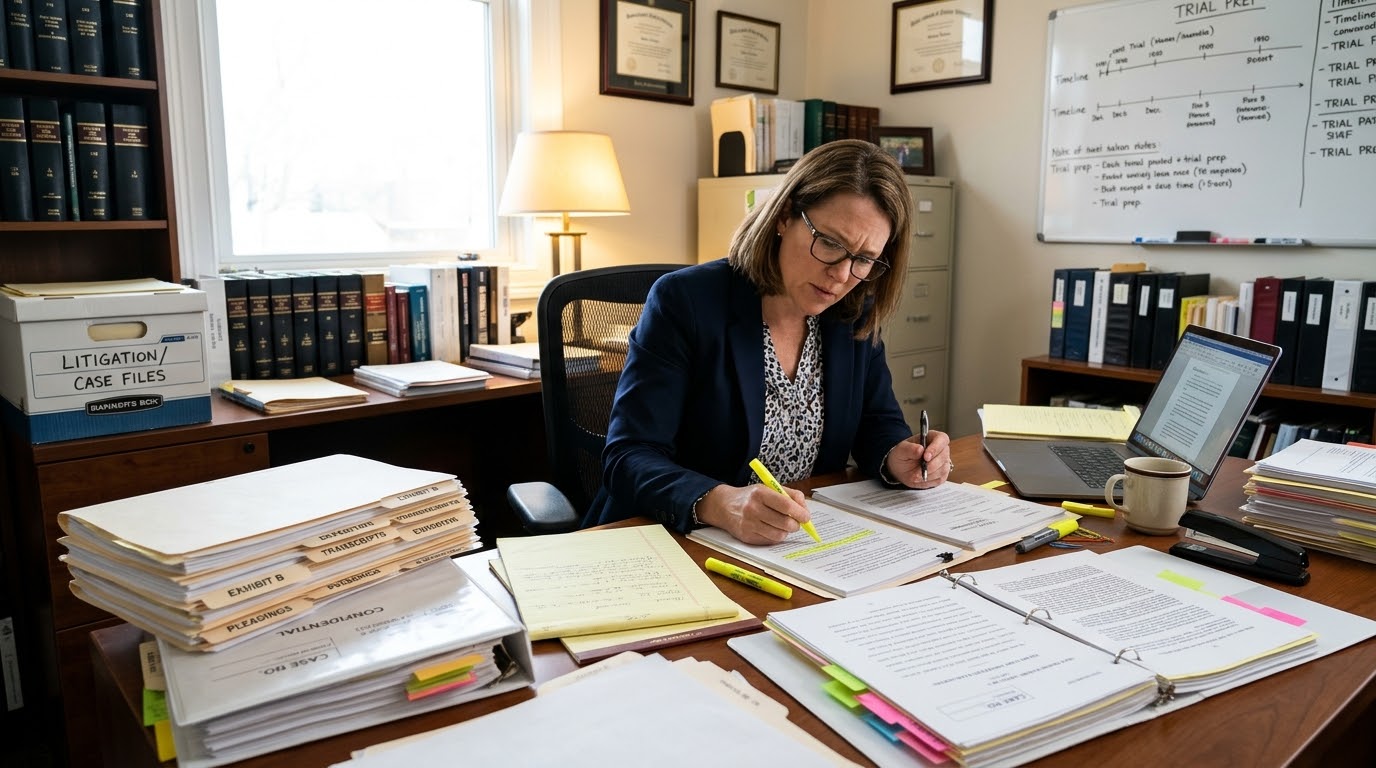
Evidence gathering and document review are important parts of preparing a
civil case.
Step 5: Settlement Discussions and Alternative Dispute Resolution
Not every civil lawsuit proceeds to trial. Many disputes are resolved through
negotiations, mediation, or other forms of alternative dispute resolution.
Settlement Negotiations
Parties may communicate directly or through their attorneys to explore an
agreement. A settlement can establish mutually accepted terms and bring a
dispute to an end without requiring a full trial.
Mediation
Mediation involves a neutral third party who helps the disputing parties
communicate and consider possible solutions. The mediator does not generally
decide who wins or loses. Instead, the process encourages voluntary agreement.
Arbitration
Arbitration involves submitting a dispute to a neutral decision-maker who
considers the parties’ positions and evidence. Depending on the agreement and
applicable law, arbitration may be binding or nonbinding.
These alternatives can sometimes reduce the time, expense, and uncertainty
associated with extended litigation.
Step 6: Preparing for Trial
If the parties cannot resolve their dispute, the case may proceed toward
trial. Before trial, the court may schedule conferences, address procedural
motions, establish deadlines, and resolve certain evidentiary or legal issues.
Both sides prepare by organizing evidence, identifying witnesses, developing
legal arguments, and reviewing the applicable court procedures.
The preparation process is particularly important in cases involving
complicated factual questions, expert testimony, substantial damages, or
multiple parties.
Step 7: The Trial and Court Decision
During a civil trial, both sides have an opportunity to present their
positions. This generally includes opening statements, witness testimony,
documentary evidence, cross-examination, and closing arguments, subject to the
applicable trial procedures.
Depending on the case, the matter may be decided by a judge or a jury. The
judge oversees the proceedings and determines applicable legal issues. When a
jury is involved, jurors evaluate the evidence and decide the factual
questions assigned to them.
Burden of Proof in Civil Cases
Many California civil claims use the preponderance of the evidence standard.
Generally, this means the party with the burden of proof must demonstrate that
the claim is more likely true than not true.
Other types of proceedings or specific claims may involve different standards
of proof. The applicable standard depends on the nature of the legal issue.
Step 8: Judgments and Possible Appeals
After the trial or another final resolution, the court may enter a judgment
that establishes the outcome of the dispute. Depending on the case, the
judgment may address monetary damages, legal obligations, or other forms of
relief.
A party who believes a legal error affected the outcome may have the right to
pursue an appeal. Appeals are subject to strict procedural requirements and
deadlines, and not every disagreement with a court’s decision provides a valid
basis for appellate review.
California’s Courts of Appeal review many appeals from superior courts.
Certain cases may also qualify for review by the California Supreme Court.
How Long Do Civil Cases Take in California?
There is no single timeline for resolving every civil lawsuit. Some relatively
straightforward disputes may conclude within months, while complicated cases
can take considerably longer.
Several factors can influence the duration of a case, including:
- The complexity of the legal and factual issues.
- The number of parties involved.
- The amount of evidence and discovery required.
- The availability of witnesses and expert professionals.
- Court scheduling and procedural requirements.
- Whether settlement negotiations are successful.
- Whether post-trial motions or appeals are pursued.
Because litigation timelines vary, parties should review applicable court
schedules and procedural deadlines rather than relying on a general estimate.
Where to Find California Civil Court Information
Readers who want to learn more about civil litigation and court procedures can
consult official California judicial resources. These sources provide
information about court locations, filing requirements, forms, rules, and
other procedural matters.
-
California Courts
– General information about the state’s judicial system and court services. -
California Courts Self-Help Guide
– Educational information about court procedures and common legal matters. -
California Rules of Court
– Rules governing procedures in California courts. -
California Legislative Information
– Access state statutes and legislative materials.
Final Thoughts
California civil litigation follows a series of procedures designed to give
parties an opportunity to present their claims, examine evidence, and obtain a
legal resolution. From filing the initial complaint to discovery, settlement
discussions, trial, and possible appeals, each stage serves a purpose in the
judicial process.
Understanding these stages provides a useful foundation for learning how
disputes are handled within the state’s court system. For individuals involved
in an actual lawsuit, consulting a qualified California attorney can help
clarify applicable procedures, deadlines, and legal options.
Disclaimer: This article is provided for general educational and
informational purposes only. It does not constitute legal advice or
establish an attorney-client relationship. Court procedures and deadlines
may vary depending on the case and applicable law. Consult a qualified
California attorney for advice concerning a specific legal matter.