
Accidents and unexpected injuries can affect nearly every aspect of a person’s
life. Beyond the physical consequences, an injury may create financial
challenges, disrupt employment, and require ongoing medical attention. When an
injury results from another party’s alleged negligence or wrongful conduct,
personal injury law may provide a legal framework for seeking compensation.
California personal injury law covers different types of incidents, including
vehicle collisions, unsafe property conditions, pedestrian accidents, and
other situations involving alleged harm. Understanding the basic principles of
negligence, liability, and damages can help readers become more familiar with
how injury-related legal claims are evaluated.
What Is Personal Injury Law?
Personal injury law is an area of civil law that addresses physical,
emotional, or other legally recognized harm allegedly caused by another
person’s or organization’s wrongful conduct. These claims generally seek
financial compensation for losses resulting from an incident.
Unlike criminal cases, which involve government prosecution of alleged
offenses, personal injury claims are generally civil disputes between injured
individuals and the parties they believe are legally responsible.
Common personal injury matters in California include:
-
Motor vehicle accidents: Injuries involving cars,
motorcycles, trucks, bicycles, and other road users. -
Pedestrian accidents: Collisions involving people walking
near streets, intersections, parking areas, or other locations. -
Slip and fall incidents: Injuries allegedly caused by
hazardous walking surfaces or unsafe property conditions. -
Workplace accidents: Incidents resulting in employee
injuries, which may involve workers’ compensation or other legal
considerations. -
Product-related injuries: Harm allegedly caused by
defective or unreasonably dangerous products. -
Other negligence claims: Situations in which a person’s
conduct may have fallen below an applicable legal standard of care.
Understanding Negligence Under California Law
Negligence is one of the central concepts in many California personal injury
cases. Generally, it involves a failure to exercise the level of care that a
reasonably careful person would use under similar circumstances.
To establish a typical negligence claim, the injured party generally must
prove several legal elements.
1. Duty of Care
The first element involves establishing that the defendant owed the injured
person a legal duty of care. The nature of that duty depends on the
relationship between the parties, the circumstances of the incident, and
applicable law.
For example, drivers generally have a duty to operate their vehicles with
reasonable care and follow applicable traffic laws. Property owners and
businesses may also have duties concerning the maintenance and safety of their
premises.
2. Breach of Duty
A breach occurs when a person’s conduct falls below the applicable standard of
care. This may involve an action that creates an unreasonable risk or a
failure to take reasonable precautions under the circumstances.
Examples may include distracted driving, failing to address known hazards, or
neglecting reasonable safety measures.
3. Causation
The injured party must generally establish that the defendant’s conduct was
legally connected to the harm suffered. This involves examining whether the
alleged breach caused the injury and whether the resulting harm is legally
attributable to that conduct.
Medical documentation, accident reports, witness statements, photographs, and
expert opinions may become relevant when evaluating causation.
4. Damages
The final element generally involves demonstrating that the injured party
suffered legally recognized harm. Depending on the circumstances, damages may
include medical expenses, lost income, physical pain, emotional suffering, and
other qualifying losses.
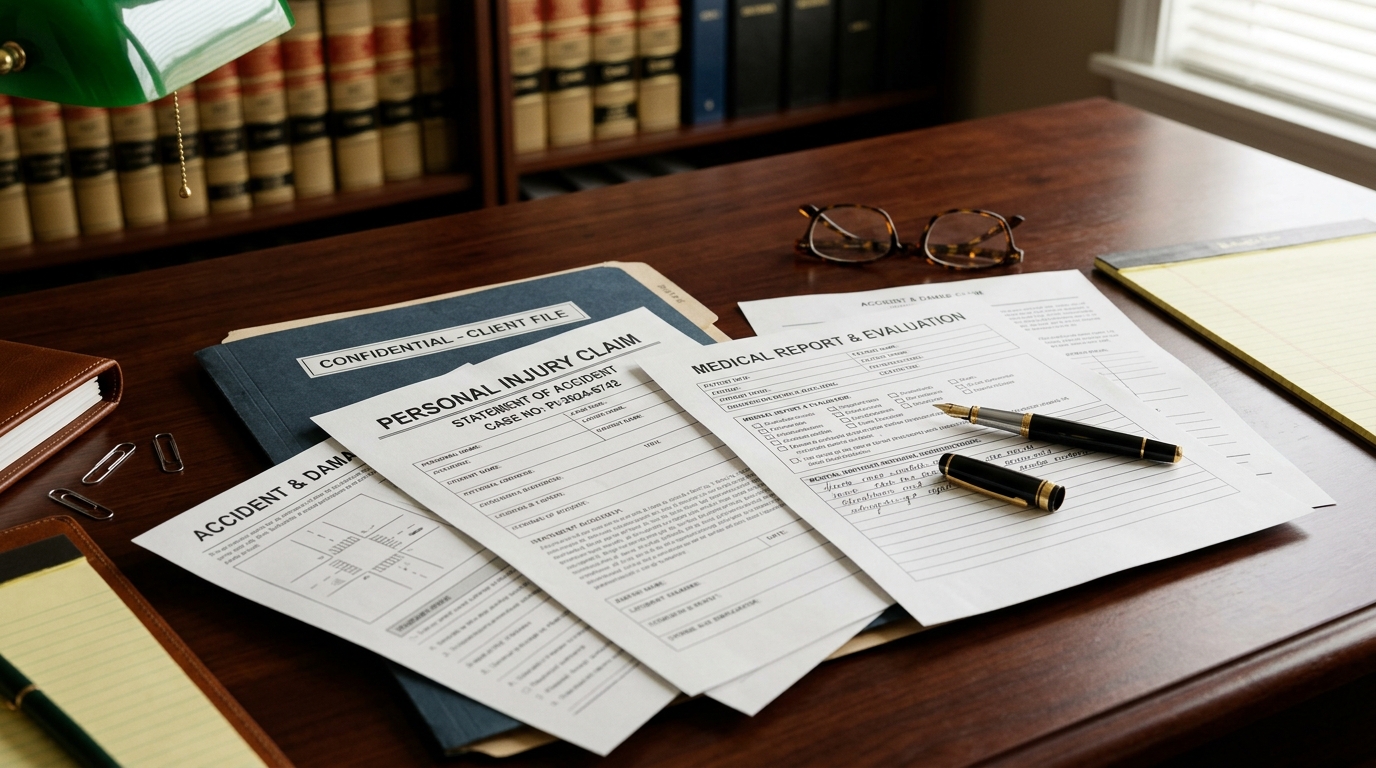
Personal injury claims may involve examining accident records, supporting
documents, and evidence of damages.
How Liability Is Determined in California
Determining liability in a personal injury case requires an examination of the
available evidence and applicable legal principles. Responsibility is not
always limited to one individual or organization. Depending on the facts,
multiple parties may share legal responsibility for an incident.
Comparative Negligence
California follows a pure comparative negligence system. This means an injured
person may still recover damages even when that person is partly responsible
for the accident, although the recoverable amount may be reduced according to
their percentage of fault.
For example, if a person is found 20% responsible for an accident and the
total damages are determined to be $100,000, the potential recovery would
generally be reduced by 20%, resulting in $80,000.
The actual allocation of responsibility depends on the evidence and
circumstances of the case.
Shared Responsibility Among Multiple Parties
Some incidents involve several potentially responsible parties. A vehicle
collision, for example, may involve multiple drivers, employers, vehicle
owners, or other entities depending on the circumstances.
California law contains specific rules concerning responsibility among
multiple defendants, including distinctions between economic and noneconomic
damages. These rules can affect how liability and financial responsibility are
evaluated.
Common Types of Personal Injury Claims
Personal injury claims arise from different circumstances, and each type may
involve distinct legal requirements and factual considerations.
Motor Vehicle Accidents
Car, motorcycle, and truck accidents are common sources of injury-related
disputes. Investigations may examine driver conduct, traffic laws, road
conditions, vehicle damage, witness accounts, and other evidence.
Potentially relevant issues include speeding, distracted driving, unsafe lane
changes, failure to yield, and impaired driving.
Slip and Fall Accidents
Slip and fall incidents may occur in stores, restaurants, apartment buildings,
parking facilities, sidewalks, and other locations. These claims are often
evaluated under premises liability principles.
Important considerations may include whether a dangerous condition existed,
whether the property owner or responsible party knew or should have known
about it, and whether reasonable steps were taken to address the hazard.
Pedestrian and Bicycle Accidents
Pedestrians and cyclists can face serious risks when interacting with motor
vehicles. Accidents may involve intersections, crosswalks, parking areas,
roadways, or other shared spaces.
Legal evaluations may consider traffic rules, visibility, driver conduct, road
design, and the actions of everyone involved.
Product Liability
Product liability claims involve injuries allegedly caused by defective or
unsafe products. Depending on the circumstances, legal theories may concern
manufacturing defects, design defects, or inadequate warnings and
instructions.
Manufacturers, distributors, retailers, and other entities may potentially
face liability under applicable product liability principles.
What Types of Compensation May Be Available?
When a personal injury claim is established, the injured person may seek
damages for different categories of losses. The amount and types of
compensation depend on the facts, applicable law, and supporting evidence.
Economic Damages
Economic damages generally refer to measurable financial losses associated
with an injury. Examples may include:
- Emergency treatment and hospital expenses.
- Medical appointments, medication, and rehabilitation costs.
- Lost wages and employment income.
- Reduced future earning capacity when supported by the evidence.
- Reasonable future medical expenses.
- Other documented financial losses related to the injury.
Noneconomic Damages
Noneconomic damages address losses that are more difficult to measure
financially. Depending on the circumstances, these may include:
- Physical pain and suffering.
- Emotional distress.
- Loss of enjoyment of life.
- Physical impairment or disfigurement.
- Other legally recognized personal losses.
Punitive Damages
In certain cases, punitive damages may be available when the legal
requirements for oppression, fraud, or malice are established under California
law. Their purpose is generally to punish particularly wrongful conduct and
discourage similar behavior rather than simply compensate for an injured
person’s losses.
Punitive damages are not available in every personal injury case and require
specific legal and evidentiary support.

Medical and financial documentation can help establish the losses associated
with an injury.
Important Deadlines for Personal Injury Claims
California law establishes time limits for filing different types of legal
claims. These deadlines are commonly known as statutes of limitations. Missing
an applicable deadline may prevent an injured person from pursuing a claim in
court.
General Personal Injury Deadline
Under California Code of Civil Procedure section 335.1, many personal injury
actions must generally be filed within two years of the date the cause of
action accrues.
Claims Involving Government Entities
Claims involving injuries caused by a California public entity or public
employee may be subject to special procedures. Under the California Government
Claims Act, many claims for personal injury generally must first be presented
to the responsible public entity within six months of accrual, subject to
applicable exceptions and requirements.
Exceptions and Special Circumstances
Some situations may involve different deadlines or legal rules, including
claims involving minors, delayed discovery, and other specific circumstances.
The applicable deadline should be evaluated based on the facts and governing
law.
Evidence That May Matter in an Injury Claim
Evidence can play an important role in evaluating how an accident occurred,
who may be responsible, and what losses resulted from the incident.
Depending on the situation, relevant materials may include:
- Police or incident reports.
- Photographs and video recordings of the accident scene.
- Medical records and treatment documentation.
- Witness contact information and statements.
- Vehicle repair estimates and property damage records.
- Employment records and documentation of lost income.
- Expert evaluations and other supporting materials.
Proper documentation can help clarify important facts, although the relevance
and admissibility of particular evidence depend on the circumstances and
applicable legal rules.
Where to Find Reliable California Personal Injury Information
Readers interested in learning more about personal injury law and related
legal requirements can explore official government resources and court
materials.
-
California Legislative Information
– Review California statutes, including provisions addressing negligence and
personal injury actions. -
California Courts
– Explore judicial information and public court resources. -
California Department of Motor Vehicles
– Find information about traffic laws, driver responsibilities, and vehicle
safety. -
California Department of Insurance
– Access consumer information about insurance coverage, claims, and
insurance-related concerns.
Final Thoughts
California personal injury law provides a legal framework for addressing
injuries allegedly caused by negligence and other wrongful conduct.
Understanding duty of care, breach, causation, damages, comparative
negligence, and filing deadlines can help readers become more familiar with
how these claims are evaluated.
Every injury-related situation is different. The circumstances of an accident,
available evidence, applicable deadlines, and the parties involved can all
influence the legal analysis. Learning about these principles is a useful
starting point, but individuals dealing with specific injury claims should
consider obtaining guidance from a qualified California attorney.
Disclaimer: This article is provided for general educational and
informational purposes only. It does not constitute legal advice or
establish an attorney-client relationship. Personal injury laws and
deadlines may vary depending on the circumstances. Consult a qualified
California attorney for advice about a specific legal matter.